You may have gender dysphoria if you feel distressed because the sex assigned to you at birth doesn’t match your personal sense of self.
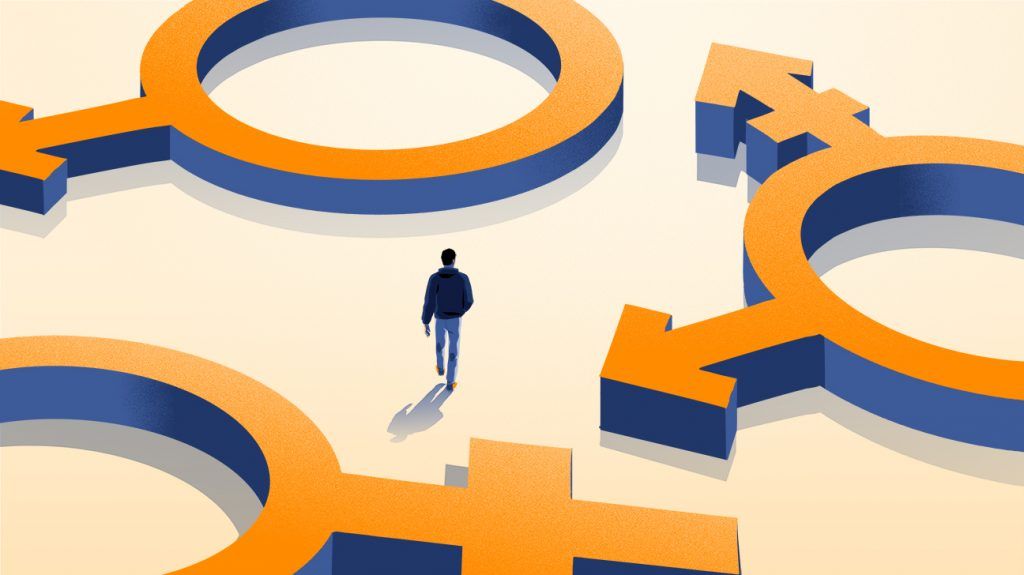
From the name you’re called at home, to shopping in stores for clothing, to the bathroom line you choose between classes, it may feel as if your gender follows you just about everywhere. For those living with gender dysphoria, these scenarios can bring up all kinds of feelings.
Gender dysphoria can disrupt multiple areas of your life, even the everyday events that others barely notice. It can also change the way you feel about yourself and relate to others.
In the United States, less than 1% of people meet the diagnostic criteria for gender dysphoria, as defined in the fifth edition of the Diagnostic and Statistical Manual of Mental Disorders (DSM-5).
Though often linked together, having gender dysphoria is not the same as being a transgender or gender-nonconforming person.
Gender dysphoria refers to the feelings of distress that occur when the sex assigned to you by a doctor at birth (usually male or female) does not match your gender identity or how you feel about yourself on the inside, according to the American Psychiatric Association (APA).
Gender dysphoria used to be known as gender identity disorder. The World Health Organization removed it in 2019 as a mental disorder and reclassified it as a “condition related to sexual health.”
The change acknowledged that being transgender is not a mental illness. It was done to reflect a more modern understanding of LGBTQIA+ issues and prevent stigma, a common occurrence with transgender, genderqueer, gender-nonconforming, and gender-diverse people.
For some, gender dysphoria can develop early in childhood.
One
For others, symptoms can occur around puberty or even later, as they reject or feel uncomfortable with the changes taking place in their body. The feelings of gender dysphoria may be continuous or come and go with time.
There is some debate about gender dysphoria that occurs later in adolescence. In one notable
Known as “rapid-onset gender dysphoria,” this proposed diagnosis remains a controversial topic in the mental health and LGBTQIA+ communities. More research is needed in this topic area using future studies, as noted in the
If you’re living with gender dysphoria, it may present as a range of symptoms, from the nagging feeling 24/7 that something isn’t quite right to turning your whole world upside down. Everyone experiences it differently.
Here are some of the signs to look for in yourself or a loved one, according to the National Health Service (NHS) in the United Kingdom:
- low-self esteem
- social isolation
- depression
- anxiety
- eating disorders
- neglecting personal care
- interpersonal conflicts
- substance use
- an increased risk of self-harm or suicide
Each individual’s experience with gender dysphoria is unique. With that said, the APA has identified several symptoms that commonly occur in adolescents and adults.
To receive a diagnosis of gender dysphoria, your symptoms must be present for 6 months or longer. The symptoms must also be causing significant distress in one or more important areas of your life, such as home, school, work, relationships, or social situations.
The symptoms can be summarized into three main categories:
1. A marked difference between assigned sex and gender identity
If you’re living with gender dysphoria, you may feel that your name, appearance, anatomy, voice, reactions, feelings, or character traits simply do not line up with the sex you were assigned at birth.
Down at your core, you might feel as though you are supposed to be someone else. You may feel “trapped” inside the wrong body. You may look into the mirror and feel as if the reflection staring back at you is foreign somehow — you know it’s you, but it’s not really “you.”
It’s important to mention that for some people living with gender dysphoria, gender identity is not as cut and dry as the fixed binaries of “male” and “female.” Rather, a person may feel as if they belong somewhere else on the gender continuum altogether, or not at all.
2. A desire to live as another gender role
If you have gender dysphoria, you may wish to live part time or full time in another gender role. This can include using a different name with pronouns to affirm that identity.
For example, a person with a birth name of Samantha may wish to use a more gender-neutral name like Sam or even Samuel. Along with this, Samuel may desire to use he/him/his or they/them/their pronouns while at home, school, work, or all of the above.
Someone with gender dysphoria may also want to express a different (or fluid) gender identity through their clothing and appearance, called gender expression. This is usually accomplished through the use of clothing, shoes, jewelry, makeup, and hairstyle.
For some people, it’s important that their gender identity matches their gender expression, but not always, according to the APA.
People with gender dysphoria may also have a desire to seek legal affirmation of their gender identity, such as changing a driver’s license or other government-issued documentation.
3. A desire to change your sex characteristics
If you have gender dysphoria, you may feel that you want to enhance, remove, or otherwise change the physical parts of you most commonly associated with your sex.
Some people want to do this to more closely align their gender expression with their gender identity or neutralize their physical appearance. Some commonly reported changes include:
- Breasts: binding or padding
- Genitals: tucking or packing
- Voice: raising or deepening pitch
- Hair: growth or removal
Some individuals — though not all — may feel a call to explore more permanent medical options to affirm their identity. Some of these procedures include:
- hormone therapy
- facial reconstruction surgeries
- hairline surgeries
- breast augmentation or mastectomy (“top surgery”)
- other gender affirming surgeries
In their early years, children may behave or dress in ways considered gender-nonconforming, which is a natural part of their development.
However, if children show a consistent pattern of behavior or preferences over time — and they’re distressed as a result of those feelings or behaviors — they may be showing early signs of gender dysphoria.
The symptoms of gender dysphoria in children are similar to adolescents and adults, with a few notable differences. To receive a diagnosis through the
- a strong desire to be another gender
- a desire to wear clothing aligned with a different gender
- a preference to play another gender in make-believe games
- a desire for toys, games, and activities typically associated with another gender
- a rejection of toys, games, and activities typically associated with their gender
- a preference for playmates of a different gender
- a feeling of distress over their sexual anatomy
- a preference for another gender’s sex characteristics
Like adolescents and adults, a diagnosis is confirmed when the symptoms of gender dysphoria in children are interfering with social situations, school, or other “important areas of functioning,” according to the DSM-5.
If you are experiencing symptoms of gender dysphoria, or distress about the misalignment between your assigned gender and your gender identity, it’s understandable.
It may be reassuring to learn as much as you can about gender dysphoria so you feel supported on your journey. Here are a few resources to continue reading:
- Human Rights Campaign: Transgender Resources
- The Trevor Project: Trans + Gender Identity
- The Trevor Project: A Guide To Being An Ally To Transgender and Nonbinary Youth
- GLAAD Transgender Resources
For parents and allies, you can find a local support group near you through PFLAG.
Remember, with education and support, gender dysphoria is manageable. Help is available right now. You can find a compassionate, understanding professional through the Association of LGBTQ+ Psychiatrists or reach out to someone you trust.
Most of all, remember: You are not alone.
Are you in a crisis or considering suicide?
If you or someone you know is considering suicide, you’re not alone. Help is available right now:
- The Trans Lifeline. This hotline is run by trans people, for trans people. Call the Trans Lifeline at 877-565-8860.
- The Trevor Project. The Trevor Project is especially intended for LGBTQIA+ folks under 25 years. Call 866-488-7386, text START to 678678, or chat online 24-7.
- The National Suicide Prevention Lifeline. Call the Lifeline at 800-273-8255, 24 hours a day, 7 days a week.
- The Crisis Text Line. Text HOME to the Crisis Text Line at 741741.
- Befrienders Worldwide. This international crisis helpline network can help you find a local helpline.